

Learn what a digital marketing funnel is, understand its stages from awareness to conversion, and discover how SEO, social media, content and paid ads work at each stage.
Have you ever wondered why someone sees a brand on Instagram today but purchases from it weeks later?
A person may first discover a brand through a Reel, later search for it on Google, read a blog, compare different options, check reviews, and finally decide to buy.
This entire journey can be understood through a digital marketing funnel.
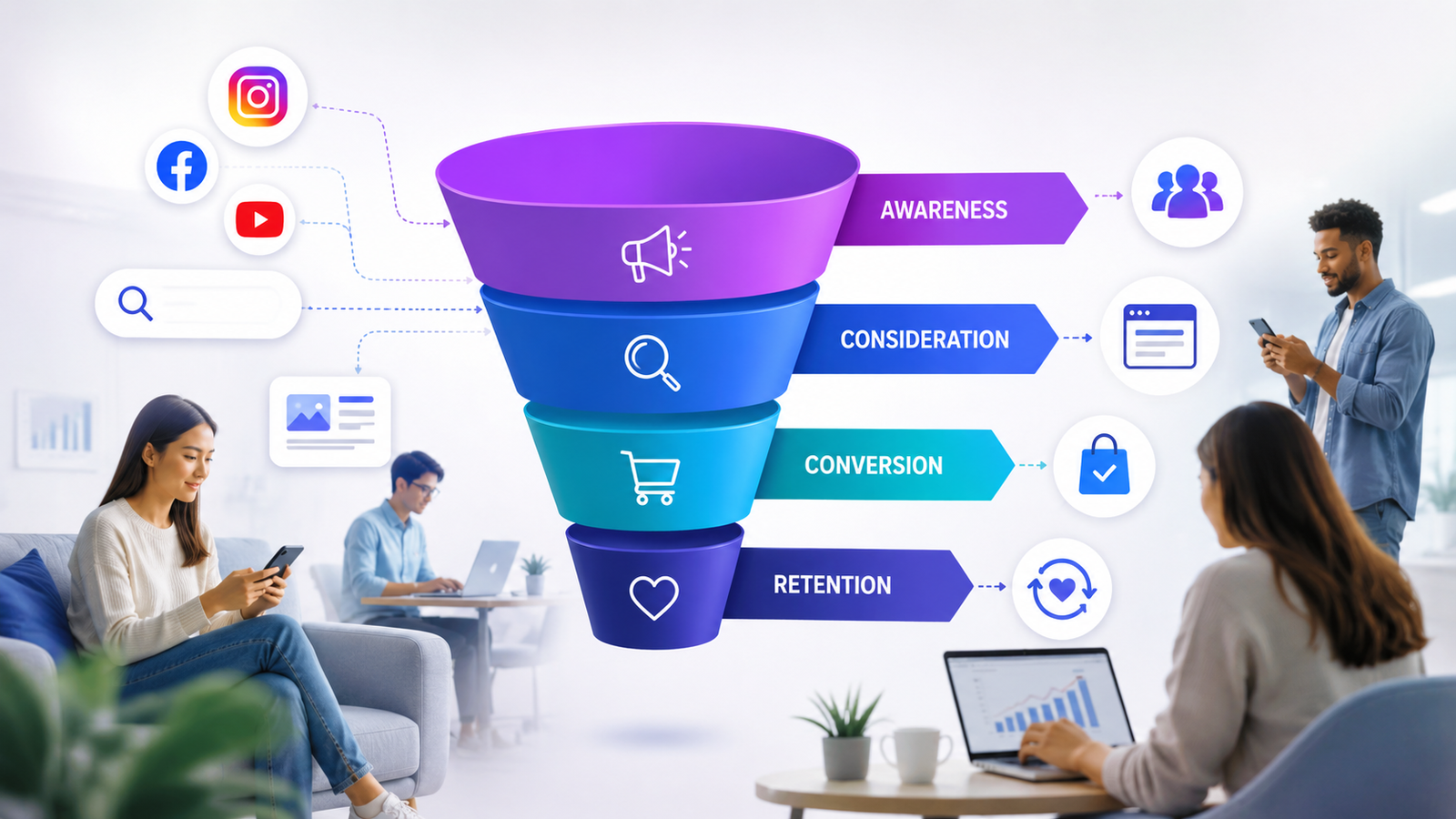
A digital marketing funnel is a framework that helps marketers understand how people move from discovering a brand to taking a desired action. Different businesses may use different funnel models, but a simple beginner-friendly model includes Awareness, Consideration, Conversion, and Retention.
Understanding the funnel helps marketers create the right message for the right person at the right stage instead of showing the same content to everyone. If you’re new to digital marketing, you can first understand the basics in our beginner’s guide to digital marketing
What Is a Digital Marketing Funnel?
A digital marketing funnel represents the journey a potential customer takes before and after taking a desired action.
Think about a real funnel. It is wide at the top and becomes narrower toward the bottom.
Marketing works in a similar way:
Many people discover a brand → some become interested → fewer seriously consider it → some convert → existing customers can become loyal customers.
The funnel isn’t necessarily a perfectly straight path. Modern customers can move between stages, return to earlier stages, or interact with several channels before making a decision.
For marketers, the funnel provides a useful way to organize campaigns, content and customer journeys.
The 4 Main Stages of a Digital Marketing Funnel
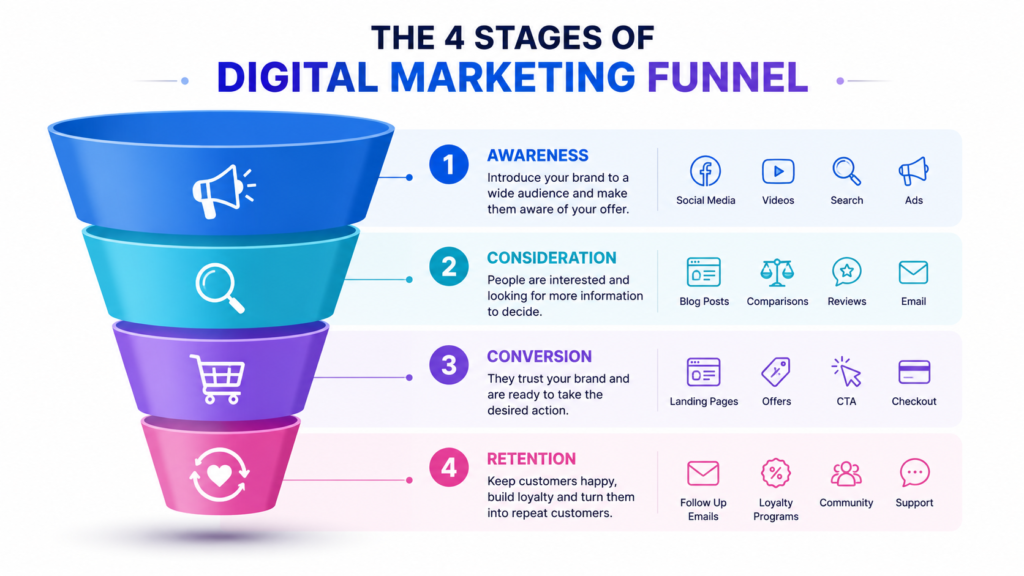
For beginners, we can divide the funnel into four major stages:
1. Awareness
2. Consideration
3. Conversion
4. Retention
Each stage has a different purpose, so the content and marketing strategy should also change.
1. Awareness — Make People Discover You
Awareness is the top of the funnel.
At this stage, people may not know your brand yet. They might simply have a problem, question, interest or need.
The main goal is not to immediately sell.
The goal is to get noticed and create awareness.
Examples of awareness content:
- SEO blog posts
- Instagram Reels
- YouTube videos
- Educational social media posts
- Infographics
- Search results
- Awareness-focused advertisements
- Helpful guides
For example, imagine someone wants to learn digital marketing.
They might search:
“What is digital marketing?”
They discover a useful blog and learn about a website or brand for the first time.
That is an awareness interaction.
Main goal:
Reach → Visibility → Discovery
Useful metrics:
- Reach
- Impressions
- Website traffic
- Video views
- Brand searches
2. Consideration — Build Interest and Trust
Once someone knows about your brand, the next step is consideration.
At this stage, the person is interested and wants to learn more.
They may ask:
- Is this useful for me?
- Can I trust this brand?
- How does it work?
- Is there a better option?
- What do other people say?
- Which option should I choose?
This is where educational and trust-building content becomes important.
Examples of consideration content:
- Detailed blog posts
- Case studies
- Tutorials
- Comparison articles
- Reviews and testimonials
- Webinars
- Email content
- Product/service pages
- Detailed videos
For example, after reading a beginner’s article about digital marketing, someone might search:
“How to learn digital marketing as a beginner?”
They are no longer just discovering the topic. They are exploring possible solutions.
Main goal:
Interest → Engagement → Trust
Useful metrics:
- Time spent on website
- Pages per session
- Returning visitors
- Email sign-ups
- Content downloads
- Engagement
3. Conversion — Encourage Action
Conversion is where an interested person takes a desired action.
Many people associate conversion only with purchasing something, but conversion can mean different things depending on the business.
A conversion could be:
- Buying a product
- Booking a service
- Filling out a form
- Signing up for a newsletter
- Downloading a resource
- Starting a free trial
- Sending an inquiry
The important thing is that the user takes the action you want them to take.
What helps at this stage?
- Clear Call-to-Actions (CTAs)
- Simple landing pages
- Product/service information
- Testimonials
- Reviews
- Offers
- Demonstrations
- Easy contact options
- Retargeting campaigns
For example:
Read Blog → Visit Service Page → Check Reviews → Click “Get Started” → Submit Form
That final action can be the conversion.
Main goal:
Decision → Action → Conversion
Useful metrics:
- Conversion rate
- Leads
- Purchases
- Sign-ups
- Cost per conversion
- Revenue
4. Retention — Don’t Stop After Conversion
One common mistake is thinking marketing ends when someone becomes a customer.
It doesn’t.
After conversion, businesses should focus on creating a good customer experience and maintaining the relationship.
This stage is commonly called retention or loyalty.
Examples:
- Follow-up emails
- Helpful customer support
- Loyalty programs
- Personalized recommendations
- Exclusive offers
- Helpful educational content
- Customer communities
- Feedback and review requests
A satisfied customer may also recommend the brand to other people.
This creates another valuable outcome:
Customer → Repeat Customer → Brand Advocate
Retention is especially important because long-term relationships can be more valuable than constantly trying to acquire completely new customers.
Digital Marketing Funnel at a Glance
| Funnel Stage | Customer Mindset | Marketing Goal | Example Content |
|---|---|---|---|
| Awareness | “What is this?” | Get discovered | Reels, blogs, videos |
| Consideration | “Is this right for me?” | Build trust | Guides, comparisons, case studies |
| Conversion | “Should I take action?” | Generate action | Landing pages, offers, CTAs |
| Retention | “I like this brand.” | Build loyalty | Emails, support, loyalty content |
The key idea is simple:
Don’t use the same message for every stage.
Someone discovering your brand for the first time needs different information from someone who is already ready to buy.
How SEO Fits Into the Digital Marketing Funnel
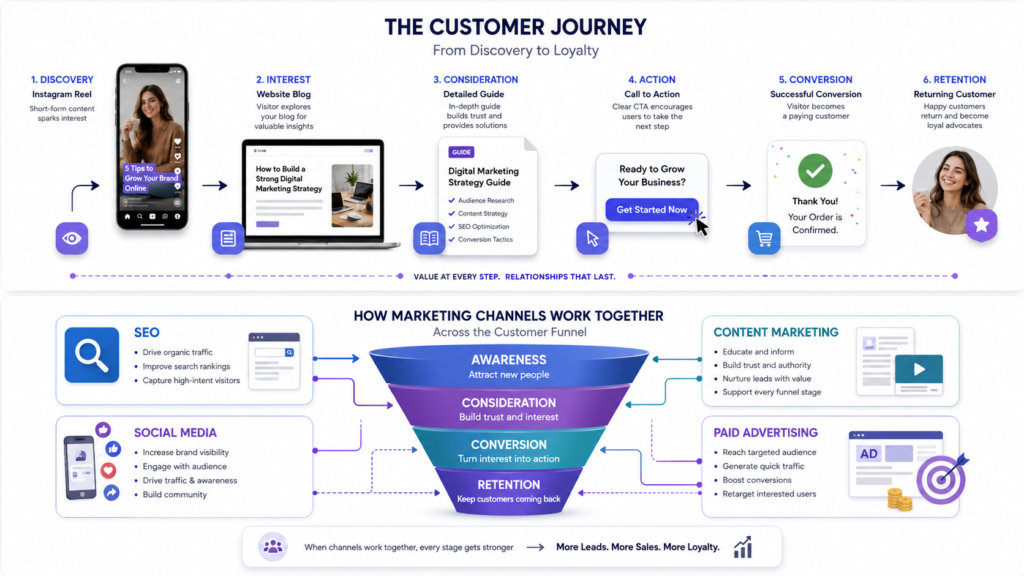
SEO can contribute to multiple stages of the funnel.
Awareness
People discover your website through informational searches.
Example:
“What is SEO?”
Consideration
People search for more specific information.
Example:
“Best SEO strategy for beginners”
Conversion
People search with stronger intent.
Example:
“SEO agency near me” or “SEO services for small business”
This is why SEO isn’t only about getting website traffic.
The bigger goal is to attract the right people and guide them toward useful actions.
How Social Media Fits Into the Funnel
Social media can also support different funnel stages.
Awareness
Use:
- Reels
- Short videos
- Educational posts
- Trending content
- Shareable graphics
Goal: Reach new people
Consideration
Use:
- Tutorials
- Carousels
- FAQs
- Testimonials
- Behind-the-scenes content
- Educational videos
Goal: Build trust
Conversion
Use:
- Product/service posts
- Offers
- Strong CTAs
- Lead-generation campaigns
- Retargeting
Goal: Encourage action
This is why simply posting every day isn’t enough.
A strong social media strategy should have a purpose behind the content.
How Content Marketing Supports the Funnel
Content is one of the most flexible parts of a digital marketing funnel.
Different types of digital marketing can support different stages of the funnel.
Top of Funnel Content
Goal: Awareness
Examples:
- Beginner guides
- Educational blogs
- Reels
- Infographics
- “What is…” articles
Middle of Funnel Content
Goal: Consideration
Examples:
- Detailed guides
- Comparisons
- Case studies
- Tutorials
- Webinars
Bottom of Funnel Content
Goal: Conversion
Examples:
- Service pages
- Product demonstrations
- Testimonials
- Pricing information
- Strong CTA pages
This is also where your LifeHub Insights section can become more powerful: your educational blogs can attract visitors, while your Projects section can demonstrate practical work.
A Simple Digital Marketing Funnel Example
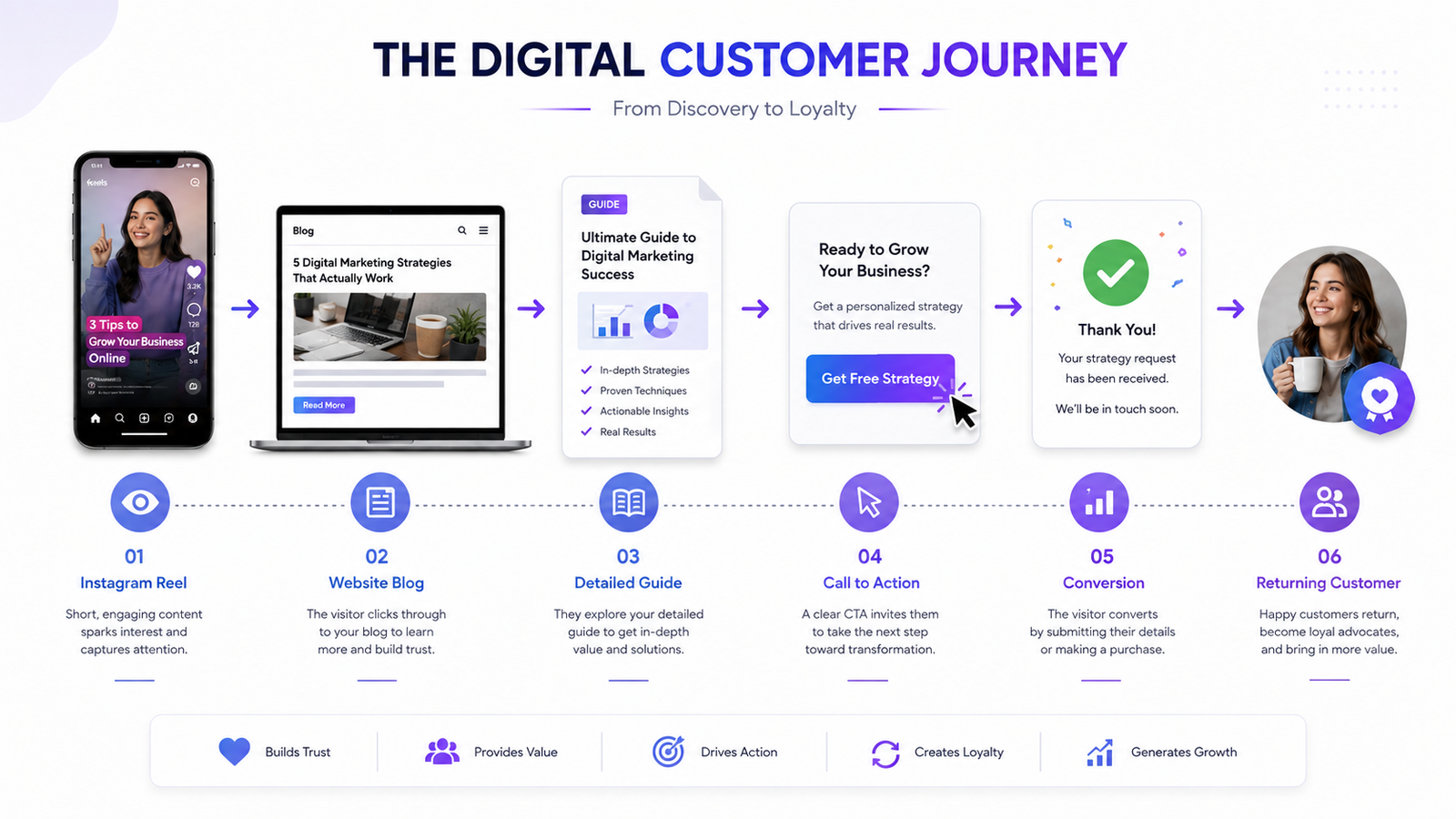
Let’s imagine a student wants to learn digital marketing.
Step 1 — Awareness
They see an Instagram Reel:
“5 Digital Marketing Skills Beginners Should Learn.”
They become curious.
↓
Step 2 — Consideration
They visit the website and read:
“What Is Digital Marketing?”
Then they explore another detailed article.
↓
Step 3 — Conversion
They decide they want to learn more and:
- Download a guide
- Subscribe to updates
- Contact the creator
- Register for a course
↓
Step 4 — Retention
They continue receiving useful content and return to the website.
This shows how several pieces of content can work together instead of operating separately.
Why Is a Digital Marketing Funnel Important?
A funnel gives marketers a clearer structure.
Without a funnel, a business may:
- Create random content
- Run ads without a clear objective
- Focus only on sales
- Ignore potential customers who aren’t ready to buy
- Miss opportunities to build long-term relationships
With a funnel, marketers can ask better questions:
Who am I targeting?
Which stage are they in?
What information do they need?
What action should they take next?
How will I measure success?
This makes marketing more strategic rather than simply producing content and hoping it works.
Common Digital Marketing Funnel Mistakes
1. Trying to Sell Immediately
Not everyone who discovers your brand is ready to buy.
First-time visitors may need education and trust.
2. Creating the Same Content for Everyone
Different stages require different messages.
3. Ignoring the Consideration Stage
A person may be interested but still need more information before taking action.
4. Having Weak CTAs
If you want users to take action, make the next step clear.
Examples:
Read More
Download Guide
Contact Me
Get Started
5. Forgetting Retention
Marketing shouldn’t stop after conversion.
6. Not Measuring Results
You need to understand where people are entering, engaging and dropping off.
How to Create a Simple Digital Marketing Funnel
If you’re a beginner, don’t make it complicated.
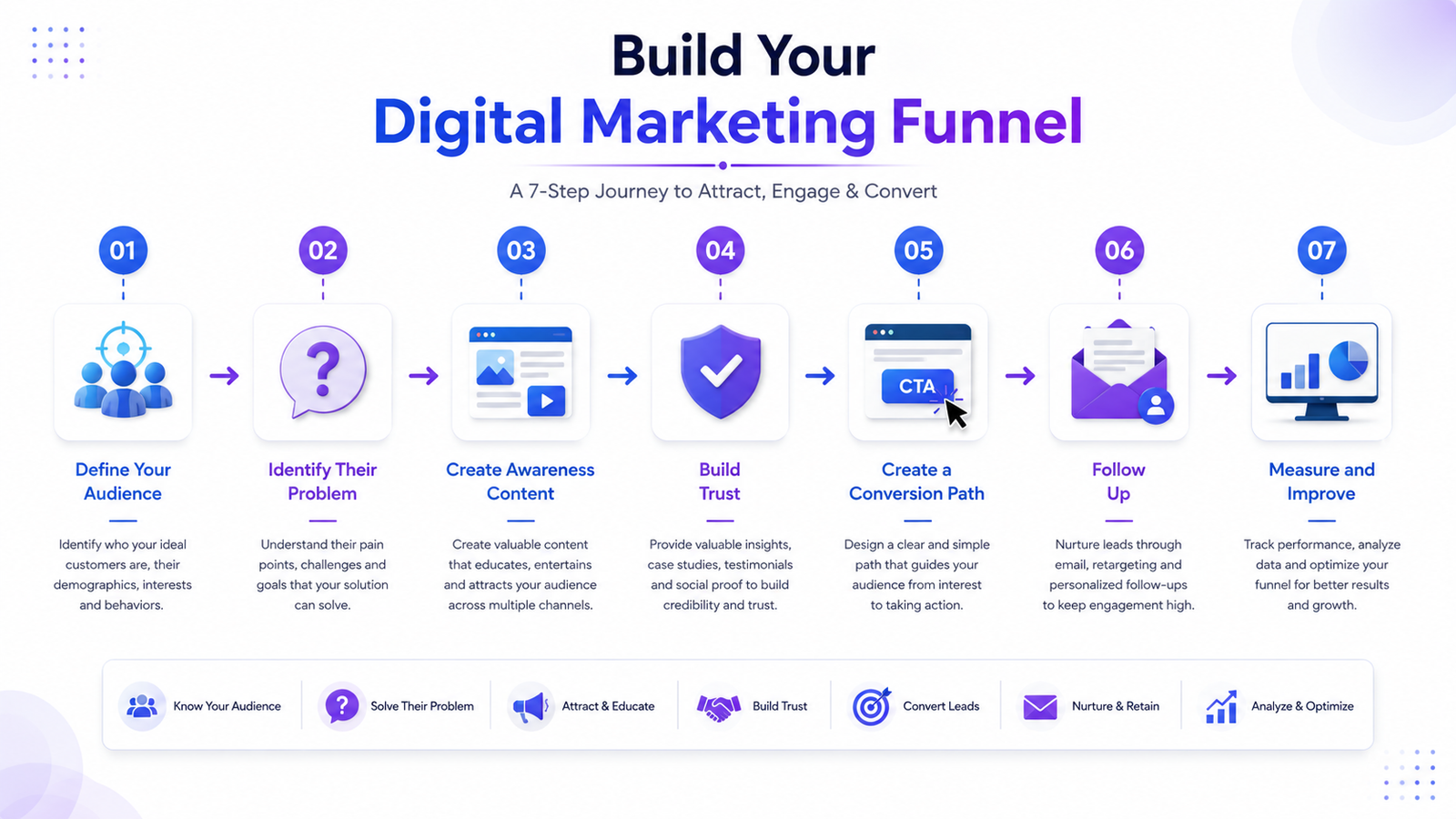
Follow these steps:
Step 1: Define Your Audience
Who are you trying to reach?
Step 2: Identify Their Problem
What are they searching for or struggling with?
Step 3: Create Awareness Content
Use blogs, social media, videos or SEO.
Step 4: Build Trust
Provide useful information, examples, tutorials and proof.
Step 5: Create a Clear Conversion Path
Tell people what they should do next.
Step 6: Follow Up
Continue providing value after the conversion.
Step 7: Measure and Improve
Look at your data and identify where people are dropping off.
Digital Marketing Funnel vs Customer Journey
These two concepts are closely related, but they aren’t exactly the same.
A customer journey describes the different interactions and experiences a person has with a brand.
A marketing funnel is a strategic framework marketers use to understand and guide people through those stages.
In real life, customers don’t always move neatly from Stage 1 → Stage 2 → Stage 3.
Someone might discover a brand, leave the website, see a Reel a few days later, search on Google, read reviews and then return to purchase.
That’s why modern digital marketing needs to consider the customer journey as well as the funnel.
Final Thoughts
A digital marketing funnel helps turn scattered marketing activities into a more organized customer journey.
From the first Instagram Reel or Google search to a website visit, a purchase and eventually customer loyalty, every interaction can have a purpose.
The most important lesson is:
Attract the right audience.
Give them the right information.
Build trust.
Make the next action easy.
Keep the relationship going.
As I continue learning digital marketing, understanding concepts like the funnel helps me see how SEO, social media, content and advertising are not separate activities. They can work together as parts of one larger strategy.
This concept is also part of my ongoing digital marketing learning journey, where I continue exploring how different areas of digital marketing work together.
And that’s what makes digital marketing interesting — it’s not just about creating content; it’s about understanding what happens after someone sees it.
Frequently Asked Questions
What is a digital marketing funnel?
A digital marketing funnel is a framework that represents the journey people take from discovering a brand to taking a desired action and potentially becoming loyal customers.
What are the main stages of a digital marketing funnel?
A simple model includes Awareness, Consideration, Conversion and Retention.
Is a marketing funnel only for online businesses?
No. The funnel concept can be applied to many types of businesses and customer journeys.
What is TOFU, MOFU and BOFU?
TOFU means Top of Funnel, usually associated with awareness. MOFU means Middle of Funnel, generally associated with consideration. BOFU means Bottom of Funnel, where prospects are closer to taking action.
Can SEO be used at different funnel stages?
Yes. SEO can support awareness through informational content and can also support users with more specific or high-intent searches.
Why is retention important?
Retention helps businesses maintain relationships with existing customers, encourage repeat actions and potentially turn satisfied customers into advocates.
[…] These different digital marketing channels can work together as part of a customer journey. Learn how they fit into a digital marketing funnel in our guide: Digital Marketing Funnel Explained: From Awareness to Conversion. […]
[…] Digital marketing doesn’t work as a single step. People usually move through different stages before taking action. To understand this process, explore our guide to the Digital Marketing Funnel : From Awareness to Conversion […]
[…] At that point, I honestly didn’t know much about digital marketing. Terms like SEO, SMO, Google Ads, Meta Ads, keyword research, campaigns, and website design were not things I was familiar with. A Beginner’s Guide to Understanding Digital Marketing. As I explored these areas, I also started understanding how different digital marketing activities work together through a customer journey and marketing funnel. […]
[…] If you want to understand this journey in more detail, read “Digital Marketing Funnel: From Awareness to Conversion.” […]